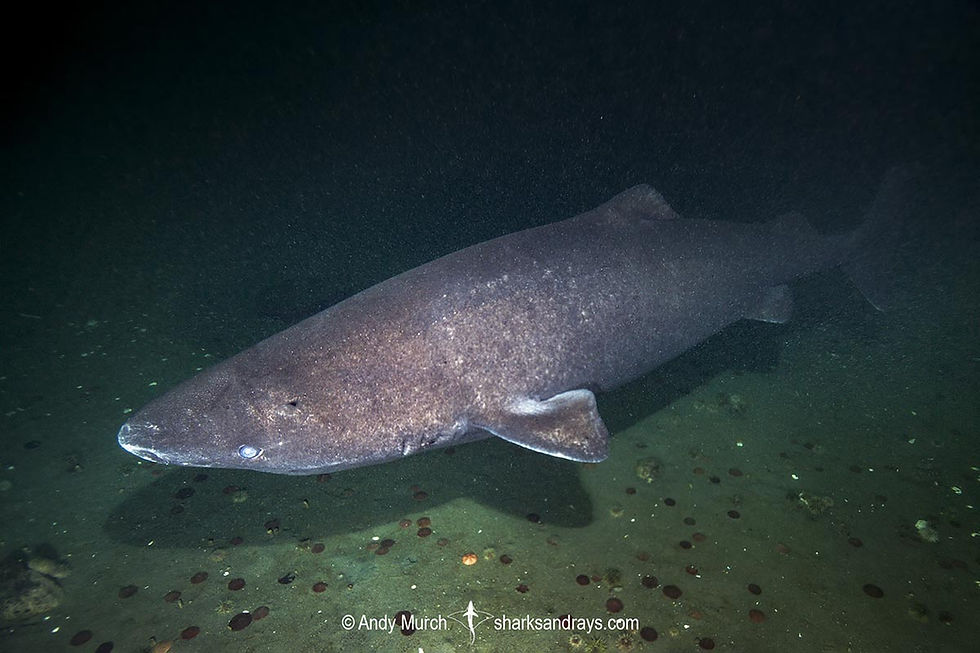
Meet the Glyphis - Sharks Even Scientists Rarely See

Updated: 1 day ago
Author: Lindsay Pierce
When we think of sharks, we often picture them as predators of the deep, swimming through the vast open ocean. While this is an accurate picture for species such as the oceanic whitetip shark or the great white shark, you might be surprised to learn that some sharks can tolerate shallow, low-salinity environments. You may know that species like bull and lemon sharks use mangroves and estuaries as nursery areas, but did you know a group of sharks spends most of its life in rivers? Meet the sharks of the genus Glyphis, a mysterious group so rare that some species have been seen alive only a handful of times.

A rare speartooth shark (Glyphis glyphis) at the Melbourne Aquarium in Australia. Image Credit: Melbourne Aquarium
Also known as the “river sharks”, sharks within Glyphis live in rivers and coastal habitats across Southeast Asia and parts of Australia. There are currently three recognized species of shark within the genus Glyphis, though there are likely more species yet to be formally described due to the group’s cryptic nature and poorly understood genetic relationships within the genus. The Ganges shark (Glyphis gangeticus) is found in the Ganges and Brahmuputra rivers of India. Two previously recognized species, the Borneo River shark (formerly Glyphis fowlerae) and the Irrawaddy River shark (formerly Glyphis siamensis) were reclassified in 2015 into G. gangeticus. This expanded the known range of the Ganges shark to the Kinabatangan River in Borneo and the Irrawaddy River in Myanmar. The northern river shark (Glyphis garricki) and the speartooth shark (Glyphis glyphis) are found in Papua New Guinea and northern Australia.
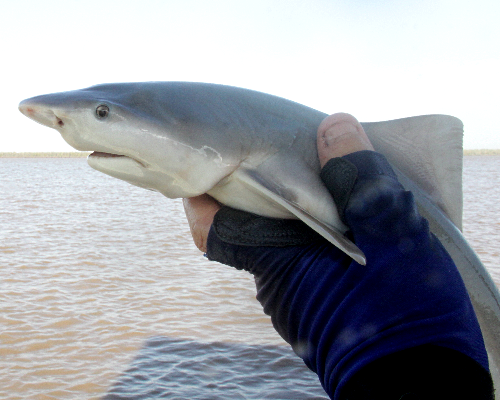
A Glyphis glyphis pup, less than 50cm in length, caught on a research expedition in western Australia’s Lower Ord River. Image Credit: Marine Biodiversity Hub
River sharks are notoriously hard to study. This is in part due to the fact that they have highly restricted geographic ranges as noted above, as well as the fact that they live in murky, low-visibility waters. River sharks also have tiny, highly fragmented populations that make it difficult for scientists to learn more about their ecology and life history. All of the species of river shark were first described based on single or very few dead specimens, and very few sightings of river sharks have since been reported in the wild. River sharks were even thought to be extinct until the end of the 20th century.
While river sharks are named for their tendency to spend extended time in freshwater, studies have shown that these animals are in fact euryhaline (tolerant of a wide range of salinities) and spend some time in saltwater. But one question remains: how do river sharks tolerate freshwater in the first place? The answer: using osmoregulation, the ability to balance their internal salt and water levels. Unlike most sharks, they can adjust the urea levels in their blood, get rid of extra water through more diluted urine, and switch their rectal salt glands into salt-saving mode instead of salt-releasing mode.
Glyphis sharks face a range of threats, and their conservation status reflects how serious the situation has become. The Ganges shark is Critically Endangered, while the northern river shark and speartooth shark are both listed as Vulnerable. Across the river shark group, the biggest dangers come from habitat loss like dams, dredging, and coastal development, along with bycatch in fishing gear meant for other species. Because Glyphis sharks are so rarely seen, scientists still don't have basic population numbers for many of them, making it hard to know just how urgent their situation really is. It's a reminder that shark conservation isn't only about protecting oceans; protecting rivers matters just as much.

The Ganges shark, Glyphis gangeticus. Image Credit: fishIDER.
SOURCES:
1. Li, C., Corrigan, S., Yang, L., Straube, N., Harris, M., Hofreiter, M., ... & Naylor, G. J. (2015). DNA capture reveals transoceanic gene flow in endangered river sharks. Proceedings of the National Academy of Sciences, 112(43), 13302-13307.
2. Ornell, C. (2012, April 11). “Could a Shark Live in a Lake?” Oceana. https://usa.oceana.org/blog/could-shark-live-lake/
3. Pillans, R. D., Stevens, J. D., Kyne, P. M., & Salini, J. (2009). Observations on the distribution, biology, short-term movements and habitat requirements of river sharks Glyphis spp. in northern Australia. Endangered Species Research, 10, 321-332.
4. IUCN 2026. The IUCN Red List of Threatened Species. Version 2026-1. <https://www.iucnredlist.org>
Image 1 Caption:
A rare speartooth shark (Glyphis glyphis) at the Melbourne Aquarium in Australia. Image Credit: Melbourne Aquarium.
Image 2 Caption:
A Glyphis glyphis pup, less than 50cm in length, caught on a research expedition in western Australia’s Lower Ord River. Image Credit: Marine Biodiversity Hub
Image 3 Caption:
The Ganges shark, Glyphis gangeticus. Image Credit: fishIDER.